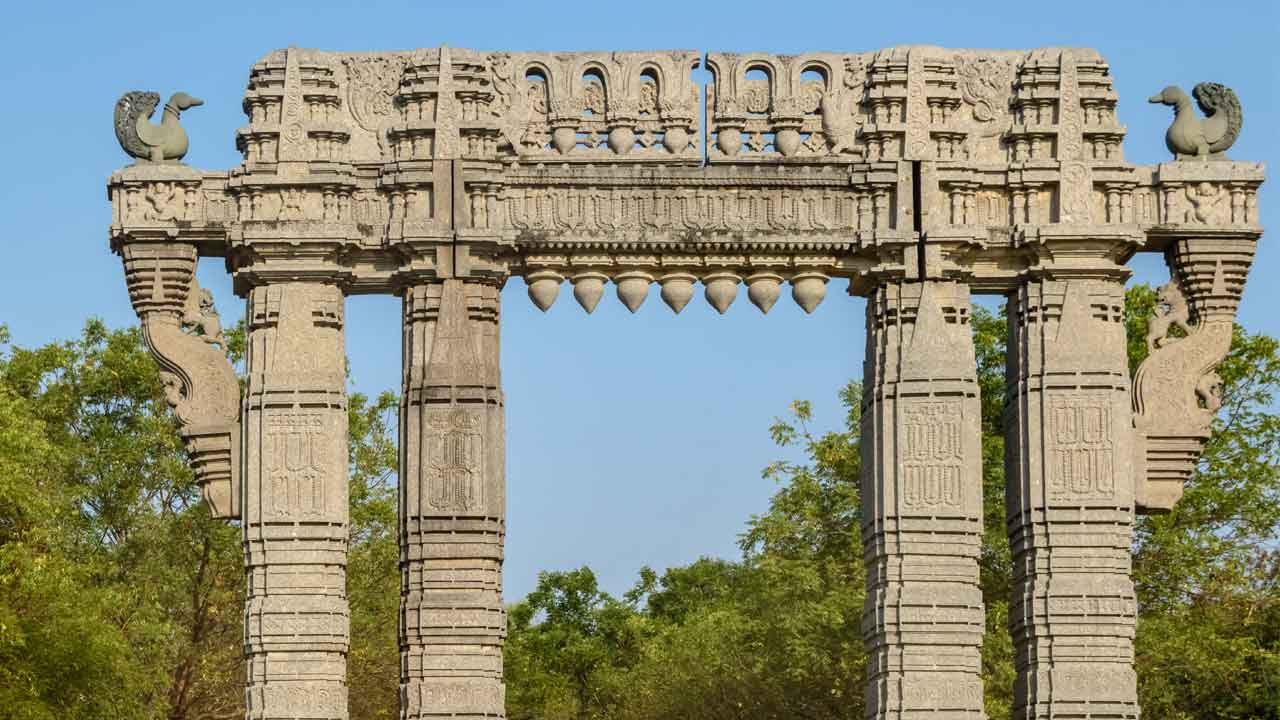
Throughout antiquity and the Middle Ages, the region now known as Telangana was ruled by multiple major Indian powers: the Mauryans, Satavahanas, Vishnukundinas, Chalukyas, Cholas, Rashtrakutas, Kakatiyas, Delhi Sultanate, Bahmani Sultanate, Golconda Sultanate. During the 16th and 17th centuries, the region was ruled by the Mughals of India. The region is known for its Ganga-Jamuni tehzeeb culture. During the 18th century and the British Raj, Telangana was ruled by the Nizam of Hyderabad. In 1823, the Nizams lost control over Northern Circars (Coastal Andhra) and Ceded Districts (Rayalseema), which were handed over to the East India Company. The annexation by the British of the Northern Circars deprived Hyderabad State, the Nizam’s dominion, of the considerable coastline it formerly had, to that of a landlocked princely state with territories in the central Deccan, bounded on all sides by British India. Thereafter, the Northern Circars were governed as part of Madras Presidency until India’s independence in 1947, after which the presidency became India’s Madras state.
The Hyderabad state joined the Union of India in 1948 after a police action. In 1956, the Hyderabad State was dissolved as part of the linguistic reorganization of states and Telangana was merged with the Telugu-speaking Andhra State (part of the Madras Presidency during the British Raj) to form Andhra Pradesh. A peasant-driven movement began to advocate for separation from Andhra Pradesh starting in the early 1950s, and continued until Telangana was granted statehood on 2 June 2014 under the leadership of K. Chandrashekar Rao.
OnAir Post: About Telangana