Telangana Government Hub

The Telangana Government Hub supports Telangana residents and their democracy by bringing together information, experts, organizations, policy makers, and the public to facilitate greater engagement in central, state, and local politics and more civil, positive discussions and collaborations on important issues and governance.

Telangana Government Hub is one of many state government hubs being launched next year by the nonpartisan, nonprofit onAir Networks.  Other state hubs will be discoverable in the future at the national India Government Hub.

Telangana is a landlocked state in India situated on the south-central stretch of the Indian peninsula on the high Deccan Plateau. It is the eleventh-largest state and the twelfth-most populated state in India with a geographical area of 112,077 km2 (43,273 sq mi) and 35,193,978 residents as per 2011 census. On 2 June 2014, the area was separated from the northwestern part of Andhra Pradesh as the newly formed state of Telangana, with Hyderabad as its capital.

OnAir Post: Telangana Government Hub
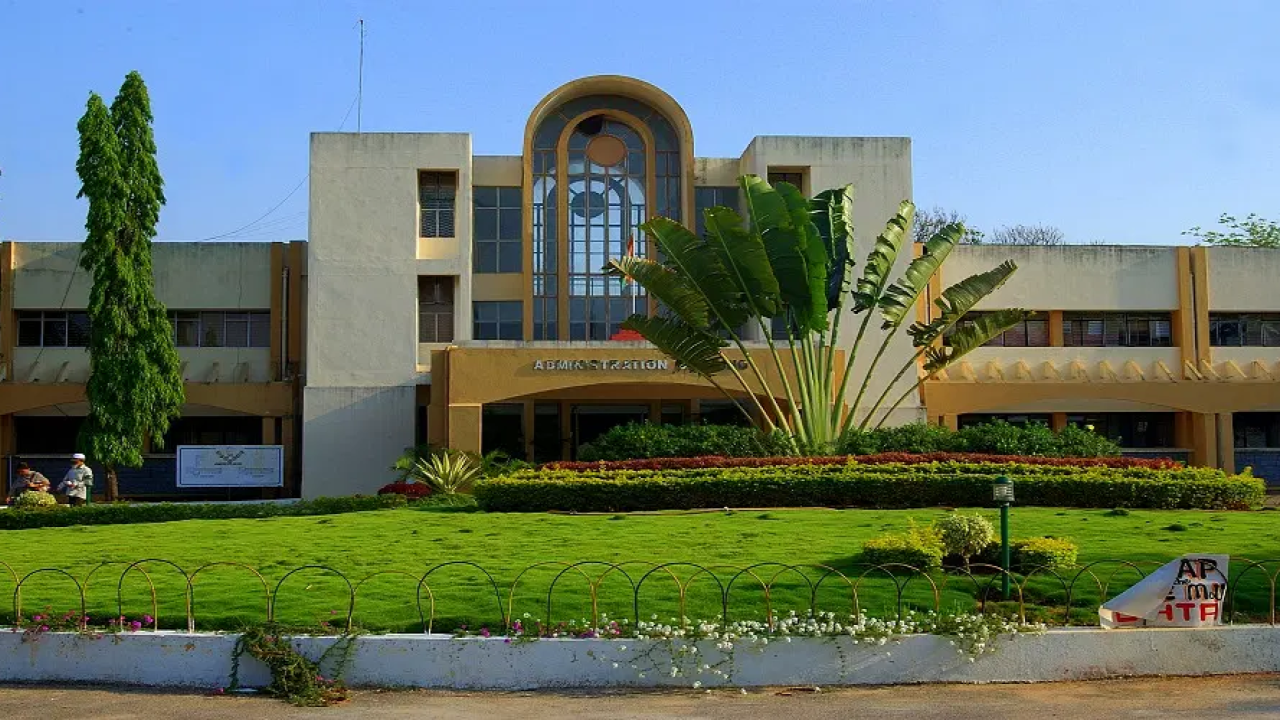
University of Hyderabad

The University of Hyderabad (IAST: Hydarābād visvavidyālayamu) is a top ranking public central research university located in Hyderabad, Telangana, India.

Founded in 1974, this mostly residential campus has more than 5,000 students and 400 faculty, from several disciplines. The governor of the state of Telangana is ex-officio the chief rector of the university, while the President of India is the visitor to the university.

The university is recognized as an Institute of Eminence (IoE) by the University Grants Commission (UGC) through the UGC (Declaration of Government Institutions as Institutions of Eminence) Guidelines, 2017 for public institutions.

OnAir Post: University of Hyderabad

K. Chandrashekar Rao

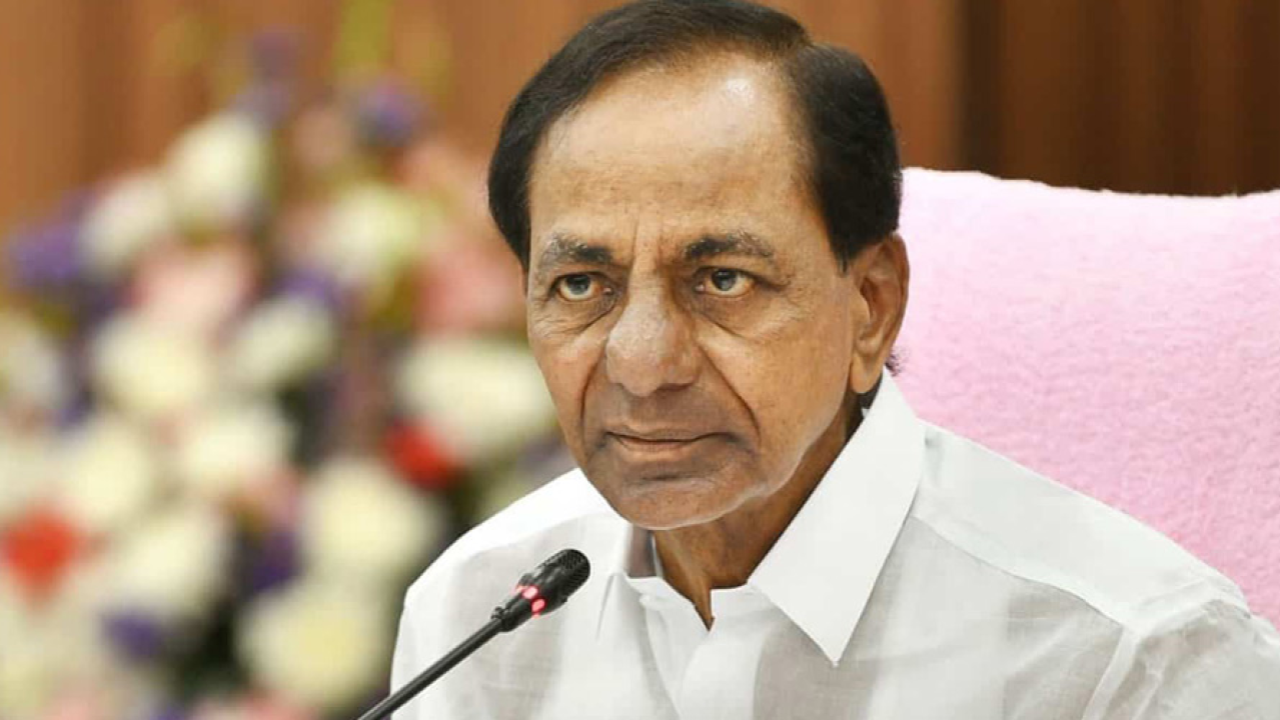
Kalvakuntla Chandrashekar Rao, often referred to by his initials KCR, is an Indian politician serving as the first and current Chief Minister of Telangana since 2 June 2014. He is the founder and leader of the Bharat Rashtra Samithi, a state party in India. He is known for leading the Telangana movement to achieve statehood for Telangana. Previously, he served as the Union Minister of Labour and Employment from 2004 to 2006. He represents Gajwel constituency in the Legislative Assembly of Telangana. Rao took oath as the first Chief Minister of Telangana in 2014 and was re-elected for the second term in 2018.

OnAir Post: K. Chandrashekar Rao

Telangana Legislative Assembly

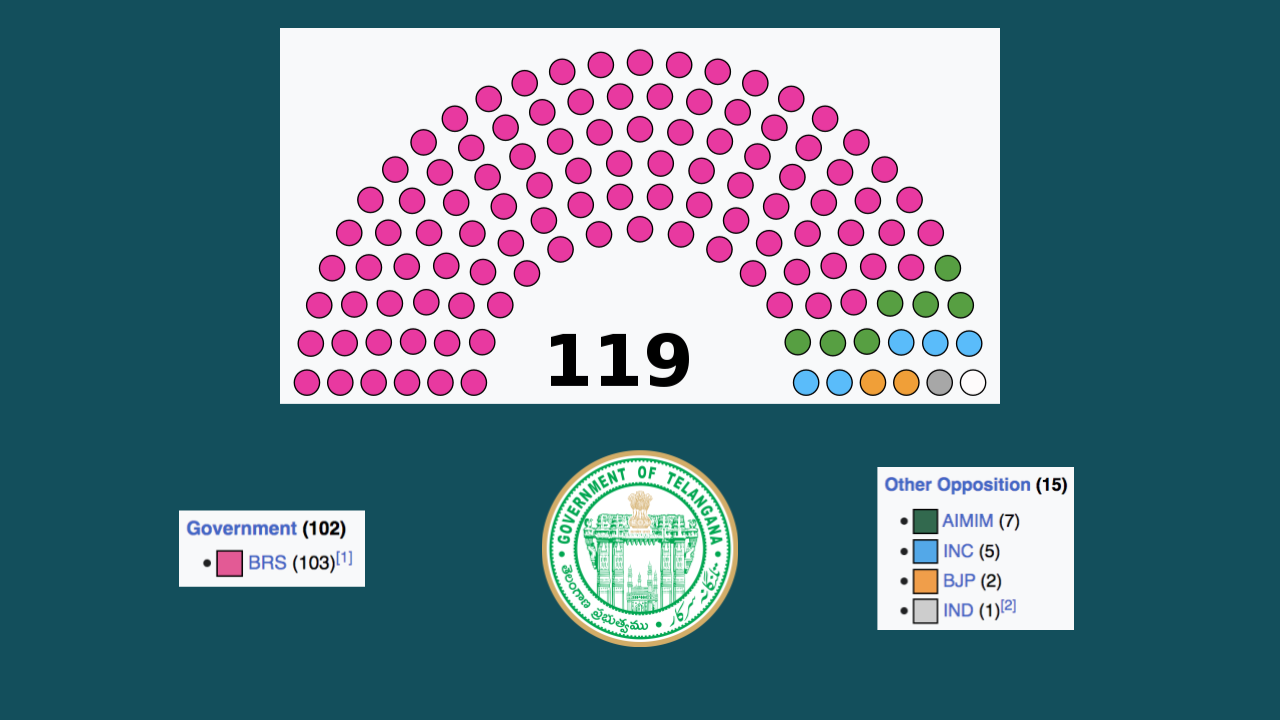
The Telangana Legislative Assembly or Telangana Śāsana Sabha is the lower house of the Telangana Legislature. The Legislative Assembly of Telangana currently consists of 119 elected members and 1 nominated member from the Anglo-Indian community. Its chief engineer was Nawab Sarwar Jung.

The members of the Vidhana Sabha are directly elected by people through adult franchise. Each constituency elects one member of the assembly. Members are popularly known as M.L.A.s. The assembly is elected using the simple plurality or “first past the post” electoral system. The elections are conducted by the Election Commission of India.

OnAir Post: Telangana Legislative Assembly

About Telangana

Throughout antiquity and the Middle Ages, the region now known as Telangana was ruled by multiple major Indian powers: the Mauryans, Satavahanas, Vishnukundinas, Chalukyas, Cholas, Rashtrakutas, Kakatiyas, Delhi Sultanate, Bahmani Sultanate, Golconda Sultanate. During the 16th and 17th centuries, the region was ruled by the Mughals of India. The region is known for its Ganga-Jamuni tehzeeb culture. During the 18th century and the British Raj, Telangana was ruled by the Nizam of Hyderabad. In 1823, the Nizams lost control over Northern Circars (Coastal Andhra) and Ceded Districts (Rayalseema), which were handed over to the East India Company. The annexation by the British of the Northern Circars deprived Hyderabad State, the Nizam’s dominion, of the considerable coastline it formerly had, to that of a landlocked princely state with territories in the central Deccan, bounded on all sides by British India. Thereafter, the Northern Circars were governed as part of Madras Presidency until India’s independence in 1947, after which the presidency became India’s Madras state.

The Hyderabad state joined the Union of India in 1948 after a police action. In 1956, the Hyderabad State was dissolved as part of the linguistic reorganization of states and Telangana was merged with the Telugu-speaking Andhra State (part of the Madras Presidency during the British Raj) to form Andhra Pradesh. A peasant-driven movement began to advocate for separation from Andhra Pradesh starting in the early 1950s, and continued until Telangana was granted statehood on 2 June 2014 under the leadership of K. Chandrashekar Rao.


OnAir Post: About Telangana

Skip to toolbar